SLOW DOWN BEFORE YOU LOSE YOURSELF
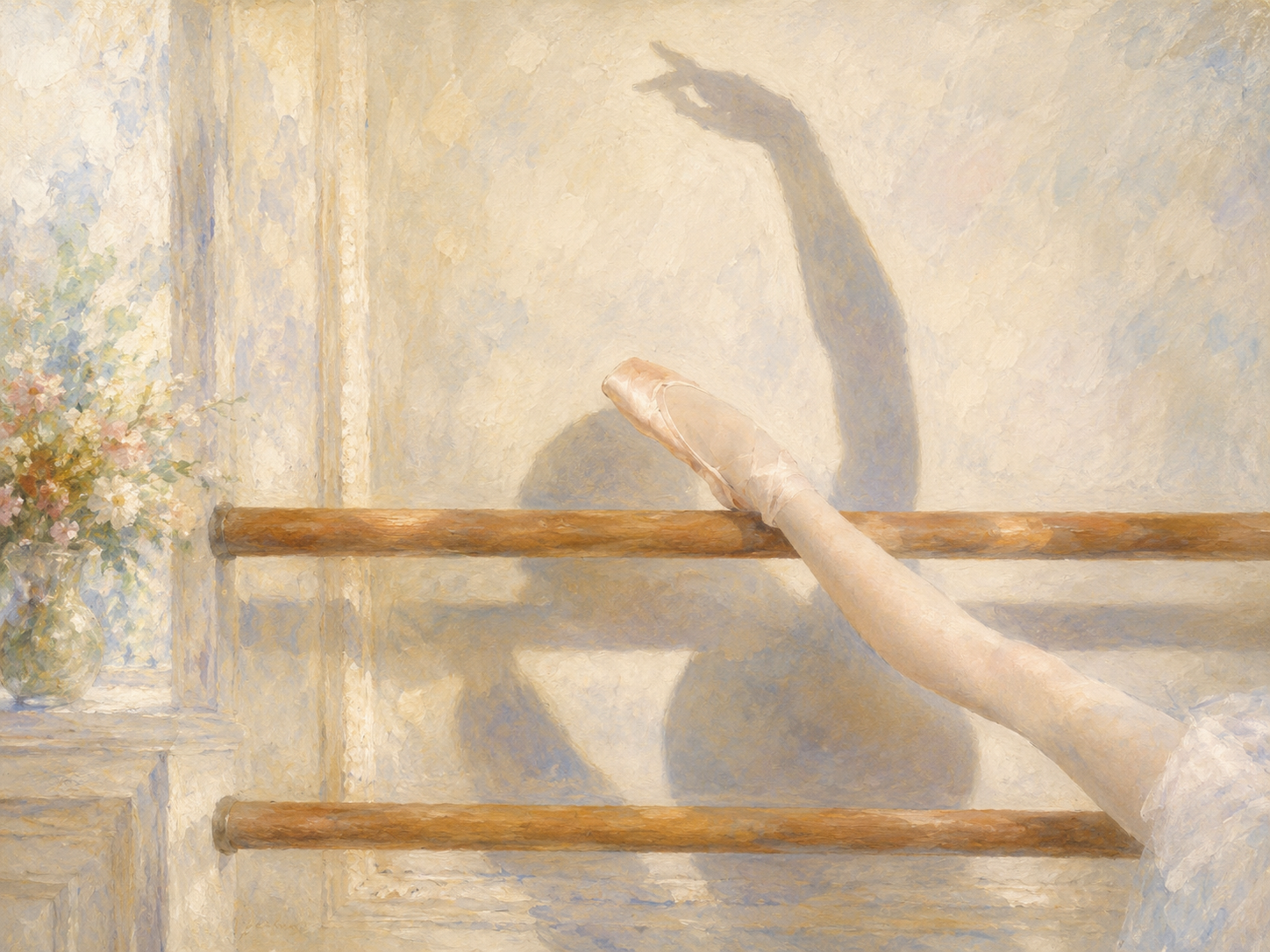
Sometimes all it takes is one misjudged step for the world to change its rhythm. A severe sprain does not possess the spectacular grandeur of great shipwrecks. It offers something better.
It has the precision of those reminders the body addresses to the soul when the soul has been moving too fast.
We tend to believe that vulnerability diminishes us. At times, it teaches us. Between the body, limitation, law, technique and that modernity which urges us to run faster than ourselves, one question remains.
How do we recover our axis without mistaking a pause for defeat.
It was an almost ordinary gesture. No tragedy. No crash. Only that slight wrong movement by which reality, with its severe courtesy, comes back to reclaim the floor.
One second earlier, everything seemed to hold. One second later, the left ankle reminded me that a human being does not inhabit the world by willpower alone.
Then one discovers something one always knew without truly hearing it. The body does not always shout.
It warns, resists, corrects. It lays a small hand on the shoulder of the busy mind and murmurs that we were never made to live against ourselves.
In contemporary life, we know how to answer emails at any hour, comment on the world in real time, produce, publish, compare, optimize.
We even know, now, how to entrust fragments of thought to intelligent tools.
But let one ligament twist, and all that sovereignty suddenly becomes relative. The human kingdom sometimes rests on a single joint no wider than a few centimeters.
So this was not merely an injury. It was a lesson in our way of being in the world. And like every discreet lesson, it began by disproving a common illusion.
We live in an age that easily confuses slowing down with giving up, stopping with failing, limping with weakening.
In such an age, the injured body seems almost improper. It disturbs the religion of fluidity. It reminds us that the human being is not a frictionless system.
And yet vulnerability is not fragility.
Fragility breaks. Vulnerability senses, perceives, forces us to learn again.
It is not a collapse. It is a compelled opening toward a soberer truth.
Talent, people say, is built in calm. Character, for its part, is forged in the storm.
I now believe it is shaped as well in that humbler zone where one must learn how to step all over again. No longer walking in order to conquer, but walking in order to understand. No longer advancing to prove, but to inhabit the road differently.
There is a modest metaphysics in that. An ankle is not a philosopher in the academic sense.
It publishes nothing. It debates nothing. It simply teaches through limitation what many discourses forget through excess of confidence.
And this concrete truth quietly meets what the law has long known.
The mission of law is not to abolish human vulnerability. It has something better to do.
As far as it can, it seeks to recognize it, frame it and protect it.
It knows that freedom has meaning only if it does not abandon the most exposed person to the law of the swiftest or the strongest.
In general, when an accident, bodily harm, temporary incapacity, a condition of dependence, or an objective imbalance arises, the law asks for two things.
First, establish the facts. Then, organize protection. That double movement is essential.
Pain alone is not always enough. There must also be evidence, certificates, observations, useful statements and sometimes contractual or patrimonial anticipation when family and material life may be displaced by a sudden event.
It is here that an idea appears which deserves far more meditation. To protect is also to anticipate.
We often imagine that foresight would somehow betray momentum. The opposite is true.
To foresee is to give the future a structure solid enough that it does not become a field of ruins at the first shock.
This truth applies to the body, to the family, to patrimony, and now to the digital world where modern tools, artificial intelligence, and networks are shifting our ways of acting before we have even measured what they are shifting within us.
Still, in practice, one must know how to remain present without dissolving into the general speed.
A sprain teaches very quickly what modernity struggles to admit. Living is not always doing.
There are days when moving forward means learning how to sit properly. Others when succeeding means renouncing the gesture too many. Others still when true discipline lies in refusing to call weakness what is, in truth, a form of care.
On the ground, a few reflexes are worth more than any beautiful theory.
Listen to the signal before the break. The body often warns before it punishes. Ignoring its signs does not prove strength. At times, it proves only stubbornness.
Seek advice early. In medicine as in law, waiting until everything worsens costs more than the first appointment. Timely counsel often preserves a future peace.
Do not romanticize excess. Chronic fatigue, constant irritation, tension, agitation, dispersion are not always proofs of passion. Sometimes, they are warnings.
Choose the place of tools. AI may assist, clarify, accelerate. It must neither replace judgment nor colonize our relation to the world nor persuade us that everything optimizable deserves to be optimized.
Return to the sensible real. Slow walking, sleep, silence, reading, breathing, simpler nourishment, nature, a true exchange. What we consume often becomes what we radiate.
Refuse the shame of limits. There is no honor in treating one’s own body as a subordinate. Self-respect often begins where the performance of invulnerability ends.
In time, one understands that the question is no longer merely how to begin again. It becomes nobler than that.
How does one return to the world without violating it, and without violating oneself.
We are passing through an anthropological reconfiguration of the way we inhabit the world.
The phrase may sound learned. The scene itself is simple.
Screens mediate our bonds, networks inflame our comparisons, tools think with us, at times even before us, and we end by no longer knowing whether we still inhabit reality itself or only its interfaces.
The risk is not merely technical. It is spiritual.
A humanity that no longer knows how to stop, look, feel, or listen soon becomes a stranger to what grounds it.
It will know how to produce, but no longer how to admire. How to react, but no longer how to contemplate. How to calculate, but no longer how to dwell.
My injured ankle may have taught me this before wider lessons arrived. We must recover the proper place of the human being among his tools.
Not against innovation, but against the temptation to surrender the center to it.
The machine may extend the hand. It must not evict the soul.
When law remains faithful to its vocation, it takes part in this work of readjustment.
It is not merely a piling up of mechanisms.
It can become a practical wisdom, a way of preventing the effervescence of the modern world from hardening into domination without limits.
To protect, to frame, to transmit, to balance perhaps that is its finest role when everything seems tempted to slip out of axis.
And since truths that matter sometimes prefer the oblique path of fables, let a small story come.
An Ankle lived in the service of a hurried man. For years it had carried him with discreet fidelity, without salary, without speeches and without ever receiving anything in return except a shoe far too sure of itself.
At its side walked Intuition. She spoke little. People called her vague because she was right before everyone else.
Farther along came Wisdom, an old woman without immediate prestige, moving so calmly that people mistook her for slow, though she already knew the destination.
One morning, the man decided he must run even faster. He had to answer, produce, prove, appear, foresee the future before even greeting the present.
Intuition whispered that he should slow down. He answered that now was not the time.
Wisdom added that the world was not asking him to go fast, but to move without losing himself. He shrugged.
Then the Ankle, who disliked both sermons and dramatic effects, chose the oldest language. It gave way.
The man fell without catastrophe, though not without pride. Confined to an immobility he first judged insulting, he began at last to hear what he had no longer been listening to.
The sound of morning. The weight of his own step. The fatigue he had called ambition. The emptiness he had called a full schedule.
He asked Intuition why she had not spoken more loudly. She answered that she whispers so as not to humiliate.
He asked Wisdom whether one must therefore fall in order to understand. She answered that no, but he no longer knew how to listen to what was carrying him.
Then the man turned toward the Ankle. For the first time, he did not ask it to obey. He thanked it.
And from that day one could see something strange. He walked more slowly, but more wholly. He made less noise, but more good.
At last he understood that true mastery does not consist in dominating one’s limits, but in living lucidly enough no longer to betray oneself.
There are summers when the body slows down so that the soul may ripen.
One believes one is losing momentum, and yet it is sometimes another birth that is beginning.
Growing older is not running faster or farther.
It is learning no longer to betray what carries us.
True strength does not lie in denying the wound, but in listening to what it has come to save within us.
End and beginning.