ARTIFICIAL PARADISES
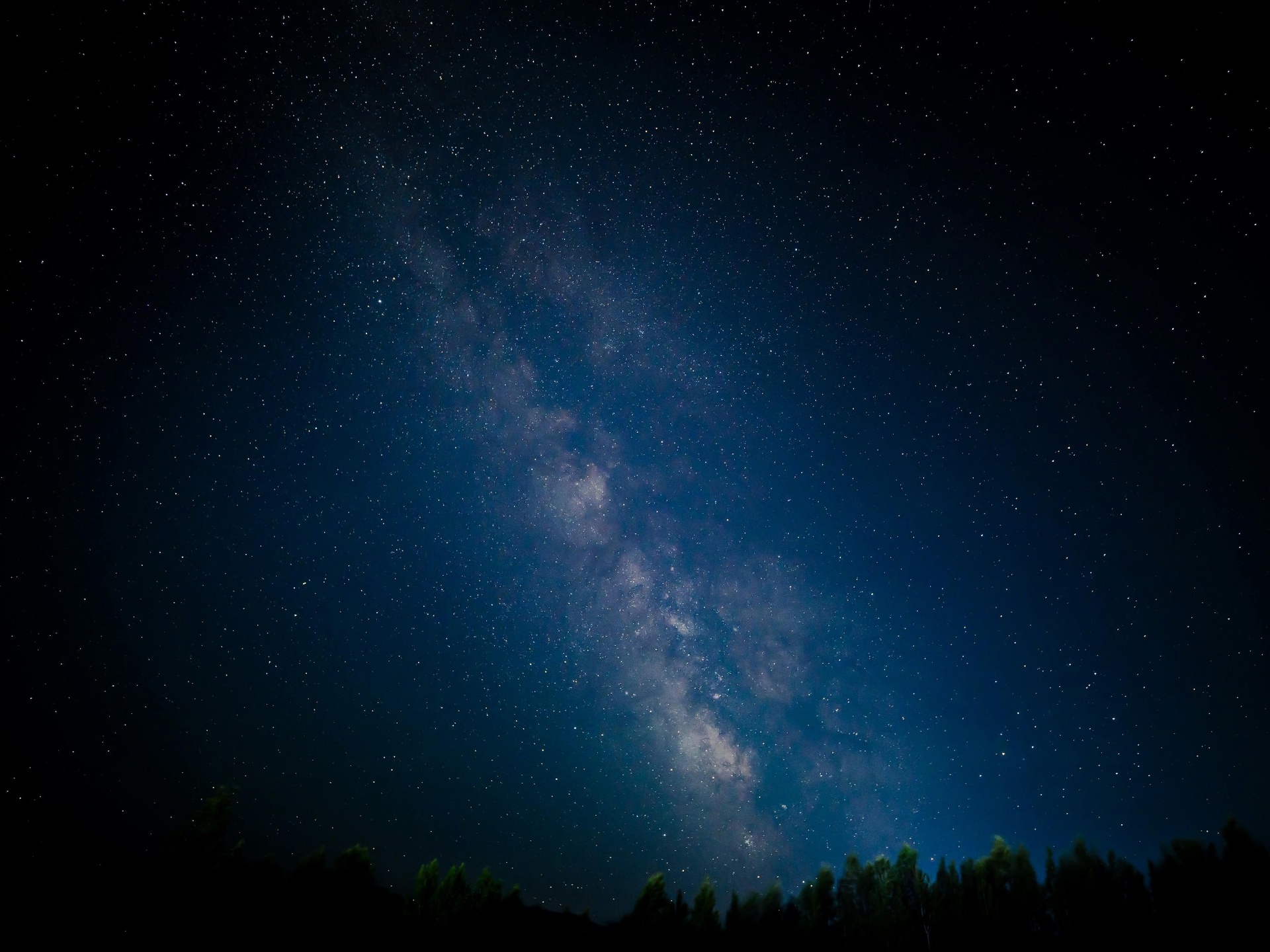
There are eras that do not enter through the door, but through a crack. A shift so subtle that it is noticed only when one finally looks up and the sky is already no longer quite the same.
We step into 2026 as one crosses a threshold : nothing collapses, nothing screams and yet, everything changes.
Past centuries thundered with cannon fire. Ours hums with servers. The old world overthrew thrones and kings ; we displace certainties.
One does not always know when something has been lost. One only knows that one reaches into one’s pocket to find it and it is no longer there.
So we light up signs, apply filters, polish slogans.
We offer ourselves portable paradises. We say it is to endure. More often, it is to forget.
And forgetting, as it happens, has an excellent sense of commerce.
Whatever the framework in which you place yourself artist, creator and i would add lawyer it is always too narrow.
The world is a winter coat ; our definitions are buttons that are too small. We pull, we adjust… and yet the cold of the unexpressed still seeps through.
We tell ourselves stories about who we are, they do not tell us who we truly are.
We tell ourselves stories about our causes, our victories, our ethics as though what truly matters could fit inside a form.
Bureaucracy has a quiet cruelty it demands a box when your life is a novel.
We ticked “Reason, other” because it was simpler… and since then, we have become the “other.”
And as for the signature, no problem at all, “other” always signs the same way… it never signs.
In trying too hard to explain, we end up reducing. In trying too hard to simplify, we manufacture a smokescreen.
The world, a poor client, never signs the report we present to it.
This is where the artificial paradise begins, when we prefer the story to reality, the varnish to the skin, sequins to truth.
It is shiny, convenient, marketable.
But when we spend too long applying makeup, we forget our own face and then we are surprised that we no longer recognize others.
And we, jurists ? We build dikes of words. It is noble work.
But sometimes, between two dikes, we forget the ocean. We gain a comma… and lose a breath.
In the end, there remains a simple compass, the encounter.
The work and the gaze. The word and the ear. The law and the human being breathing behind it.
Everything else is a display window. And when the window becomes a home, we eventually fall asleep standing up.
It is precisely when our bed of certainties becomes the most comfortable that the world begins to slip beneath our feet.
Let us abandon the imagery of catastrophe : meteorites, tsunamis, nuclear war.
Catastrophe is comforting, we see it coming. We can face it or at least announce it.
It consoles us too easily, it promises a noise, a date, a moment when everyone can finally say, “There it is.”
Our era has a subtler vice, it changes without declaring itself.
The world does not collapse ; it shifts.
And we grow accustomed to the slope as one does to a chair that is slightly too low until we start believing that it is our back that is poorly made.
Rousseau said it with cruel precision : “They became poor without having lost anything, because while everything changed around them, they alone had not changed.”
Here we are, impoverished without theft, diminished without fracture.
Everything moved around us, and we continued very dignified to do what we had always known how to do.
History loves this scene, the best remain serious while the ground quietly gives way beneath their feet.
It is not the end of law, which is an old oak tree. It is its cognitive delocalization.
Legal thought now executes elsewhere, within an infrastructure as banal and as decisive as electricity.
We do not see it. We do not fully understand it. And yet, we are all plugged into it even those who claim to be “disconnected.”
Artificial intelligence does not arrive like an adversary knocking at the courthouse door. It arrives like the ground itself , we walk on it.
It does not replace the lawyer; it absorbs part of the function upstream, behind the scenes of reasoning.
It compares, simulates, tests, and starts again. Without fatigue.Without vanity.
Without that human habit of doubt at 2:17 a.m, rereading a sentence for the fifteenth time.
The machine does not reread ,it restarts.
We reread that is our way of proving that we are alive… and faintly responsible.
The machine does not replace the lawyer like an actor replaced on stage.
It by passes the function the way water by passes a stone without hatred, without intention through sheer efficiency.
A myriad of specialized agents, interconnected and self-correcting, generate and adjust outcomes. Nothing is “conscious.”
Yet the whole becomes more coherent, faster and more profitable than fragmented human deliberation.
Gradually, human work becomes an interface : we validate, we phrase, we sign.
The adversarial process remains but discussion now takes place within a pre-drawn framework.
The most discreet danger is not the machine; it is our quiet denial.
We tell ourselves, “They are only tools.” Except this time, the tool does not merely assist the hand it accompanies the mind.
And a guided mind may eventually walk on its own… without warning us…in a direction that is not ours.
And here comes 2026 a threshold, a passage.
Not a sentence, but a fundamental question : what do you hold on to, when everything accelerates ?
Tailor-made solutions are costly ; the soul has no accounting code which is precisely why we forget it, and lose it, without even noticing.
There exists a difference that modernity tends to forget because it fits into no spreadsheet, responsibility.
A machine can propose. It can even persuade. But it cannot answer.
In any case file, someone must bear the weight of choice, to say yes or no, to assume the consequences, to accept the risk, and sometimes to look a client in the eyes when the truth lacks the elegance of an optimal solution.
An algorithm has no conscience and therefore no remorse. That is comfortable. For the algorithm.
The lawyer, by contrast, possesses this splendid weaknes. He signs with his name and sometimes with his sleep.
The lawyer’s added value is not to be a faster calculator. It is to be a guardian.
Guardian of confidentiality, of dignity, of the adversarial process, of nuance of that human dimension which refuses to be reduced to a “probability of success.”
The machine optimizes. The lawyer chooses. And to choose, in law, is not to click it is to answer.
And it is precisely when technology gains ground everywhere that we must relearn a simple gesture, to raise our eyes.
Not to flee, but to rediscover what neither the algorithm nor the market can produce, an inner height and, dare we say it, hope.
Above the abyss, there exists a beauty that cannot be commanded and can never be optimized.
It appears in a glance, in a sentence, in a silence like those stars that need not be understood in order to continue existing.
At the threshold of this year, I think of Mercury, god of roads and exchanges, patron of crossroads and, let us say it plainly, of urgent cases.
I think of Hermes, guardian of passages, of thresholds, of interpretation.
And I think of the Villa Medici, in Rome, a place where one learns that modernity is worth nothing unless it remains faithful to a certain height.
For technology without height is like a staircase without a landing, it climbs quickly… but no one remembers why.
And when we no longer know why, we begin to call it “efficiency,” as though a train could boast of its speed without checking whether it is heading in the right direction.
I remember one evening. A corridor.
Someone was waiting, a coat buttoned too high, a hand clenched around a file too thick, the humble fatigue of those who dare not take up too much space.
She did not ask for a miracle. She wanted one rare thing to be understood without being reduced.
Then she said, almost apologetically :“I do not want to crush the other. I only want… for what I lived through to be recognized.”
This is the law, when it is worthy, not vengeance, but recognition. Not performance, but repair.
Yes, AI can process vast amounts of data, cross-reference case law and propose strategies.
But it cannot hold the invisible hand that trembles behind a file.
It cannot say without theatre, without calculation : “I have heard you.”
It is here that our profession regains its grandeur, in assumed humanity, in the refusal to turn a person into a “case”, in the defense of a dignity that cannot be quantified.
And perhaps this is, in the end, the simplest secret of all, life is only a brief spark, yet sometimes it is enough simply to be in one’s rightful place for it to illuminate without effort what must be seen.
When one is true to oneself, one does what is necessary; magic follows.
The wind passes. The stars remain. And beauty, silently, restores the world to its proper height.
One night, in a city that never quite sleeps, a lawyer was walking home late.
He had pleaded, argued, rationalized stacked texts the way one stacks stones, to build a wall against anxiety.
We believe we protect ourselves through reason; in the end, we discover that it sometimes merely traces the outline of our fear more clearly.
Along his path, he passed an immense construction site. Floodlights mimicking daylight, cranes clawing at the sky, blueprints displayed like modern gospels.
At the center, a slogan shone like a promise : “Coming soon: faster, simpler, more efficient.”
Seated on a bench, a man was watching it all. Beside him, a small square, gleaming machine blinked softly. It spoke quickly, with a confident voice, as though the future were nothing more than a matter of calculation.
— Do you like it? the lawyer asked, out of politeness.
— I’m trying to, the man replied. I’m afraid I no longer have a place in the “faster.”
— Yet it’s practical, said the lawyer.
— Yes. The problem is that the practical sometimes ends up making us… practiced upon.
The machine cut in, almost pleased to be useful :
— Option A : maximum speed.
— Option B : minimal risk.
— Option C : global optimization.
The lawyer smiled. He looked at the slogan, then at the man, then at the little shining box blinking like a sleepless conscience.
— And option D ? he asked.
— What option D ? replied the machine.
— The one where we stop because we have promised.
— The one where we listen to someone crying behind a fence.
— The one where we choose the most just path, not the most efficient.
The machine calculated. It warmed slightly, as though the very idea of justice required a physical effort.
— Result: Option D non-quantifiable.
So the lawyer sat down beside the man. Above them, the sky was clear. A few stars few, but enough to recall the infinite.
— I sometimes feel, said the lawyer, that modernity gives us answers… before we have found the right questions.
The man nodded; his voice trembled slightly :
— And I sometimes feel we mistake the light of floodlights… for that of the stars.
They remained there for a while. The wind passed between the fences, crumpling the slogan like a sheet too confident in itself. And within that breath, something endured the proof that the world, despite everything, was still breathing.
Then the lawyer asked the man, simply :
— What is your name?
The man lifted his head, surprised as one is when one is given back one’s name and with it, a measure of dignity.
The machine blinked differently, as if it had just learned an untranslatable word :
— New parameter detected: dignity.
The lawyer replied gently :
— That is not a parameter. It is a beginning.
The machine fell silent, as though it finally understood that one may cross a century with perfect maps and still become lost, when one forgets that justice is not a destination, it is a way of walking.
Progress is a road; humanity is the compass. Yes, we need speed but we also need meaning. And if a tool promises us a paradise, we should make sure it has not forgotten to reserve a place for the soul.
Before fading, the slogan at the construction site seemed less triumphant. And the little machine, in a softer voice, asked :
— Why do the stars exist?
The lawyer smiled tired, but alive :
— The universe never explains why.
— It leaves us the honor of inventing meaning.
End and beginning.